Minimal Gear: Where I Spent Less
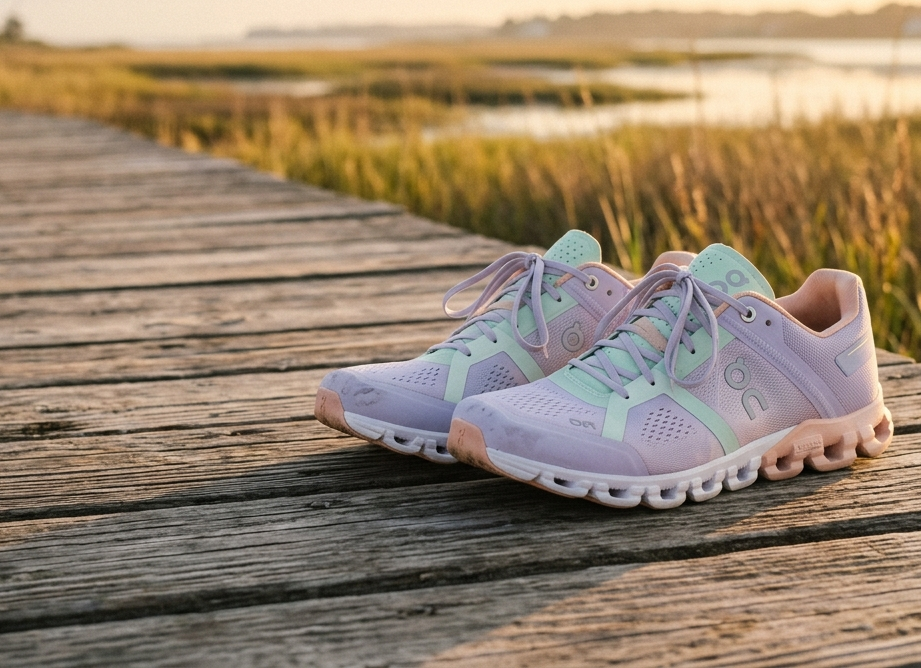
The shortlist of items that survived three seasons of slow miles.
Read articleA soft, pastel corner of the running internet. Slow miles, calm heartbeats, kind notebooks.
Subscribe to newsletterUpdated: April 12, 2026
For two seasons in a row I kept staring at my watch, hunting splits, and finishing each run a little more grumpy than I started. Then one rainy October morning in Toronto, I left the watch at home, jogged at a pace that felt almost too easy, and remembered why I started running in the first place. This is a long note about slow miles, soft breathing, and the comfort of a steady pulse.
It is easy to fall into the speed trap. Apps reward streaks, friends post screenshots of their splits, and somewhere in the back of the mind a little voice whispers that faster equals better. For a while I followed that voice. Every Tuesday became intervals, every Saturday became a tempo test, and every Sunday became a recovery jog that felt more like punishment than rest. I was running more, but enjoying it less.
According to experts cited by Harvard wellness columns, sustainable habits are built on enjoyment, not endurance of discomfort. That sentence sounds soft, almost too gentle, until you realise how rarely we apply it to our own training plans. We forgive ourselves a lazy Sunday on the couch, but not a slow kilometre on the trail.
“Speed is a beautiful guest, but comfortable pace is the friend who actually stays for tea.” — a coach I met at a park run in Vancouver
Comfortable pace is the speed at which I can still hold a conversation with a running partner without gasping. It is not lazy, and it is not slow for the sake of slow. It is the pace that lets me breathe through my nose for most of the route, lets my shoulders stay loose, and lets my mind wander instead of staring at my wrist every thirty seconds.
When I switched to this approach, three things happened in the first month. My mood improved. My sleep settled. And, oddly enough, my long-run distance grew on its own, without any extra effort. WHO specialists often note that gentle, regular movement supports well-being more than rare bursts of intensity. My own experience matched that idea.
Pulse is the simplest signal I have, and for a long time I ignored it. A comfortable run for me sits in a zone where I can feel my heartbeat without it pounding, where my breath comes in soft fours instead of frantic twos. When I learned to listen to that rhythm, the watch became less of a judge and more of a journal.
I do not track pulse to optimise. I track it to remember. The graph after a slow run looks like a calm hill — a gentle climb, a long plateau, a soft descent. That picture, more than any pace number, tells me whether I trained well or simply trained hard.
The hardest part was not the slow pace. It was the silence on my wrist. For the first two weeks I felt as if I were running blind. Then, slowly, I started reading my body instead of the screen. The wind on the cheek became a thermometer. The depth of breath became a speedometer. The lightness in the legs became a battery indicator.
This is not anti-technology. I still glance at my watch a few times per week. But the relationship has changed. The watch reports; my body decides. According to experts cited in long-form running media, this shift toward “internal cues” is one of the quiet markers of mature, sustainable practice.
My week is not a training plan. It is more like a kitchen routine — flexible, friendly, and rarely the same twice. Most weeks I run three or four times, with one slightly longer outing on the weekend. None of those runs are heroic. They are simply present.
Once I made peace with comfortable pace, other parts of life softened too. I started walking instead of sprinting between meetings. I started cooking dinner instead of doom-scrolling delivery apps. I started reading in the evenings instead of refreshing race-result pages. None of these changes were dramatic. They were small adjustments that generally promote a kinder relationship with time itself.
Emma Caldwell is a wellness writer based in Toronto. She is not a doctor or a coach — just a long-time amateur runner who keeps a small notebook of pulse readings and pleasant routes. Her favourite season is the calm-paced shoulder of late September.
This content is for informational purposes only and is not a substitute for professional advice. Consult a qualified specialist before starting any new fitness or wellness program. Information on this blog is based on open sources and personal experience. It does not replace medical consultation.
The shortlist of items that survived three seasons of slow miles.
Read articleA side-by-side of two different pulses, two different moods.
Read articleA gentle four-week on-ramp that will not burn you out.
Read articleWeekly notes on pulse, breathing, and gentle running. No noise, just a quiet nudge.